
Unlocking Your Potential: Exploring the Types of Learning
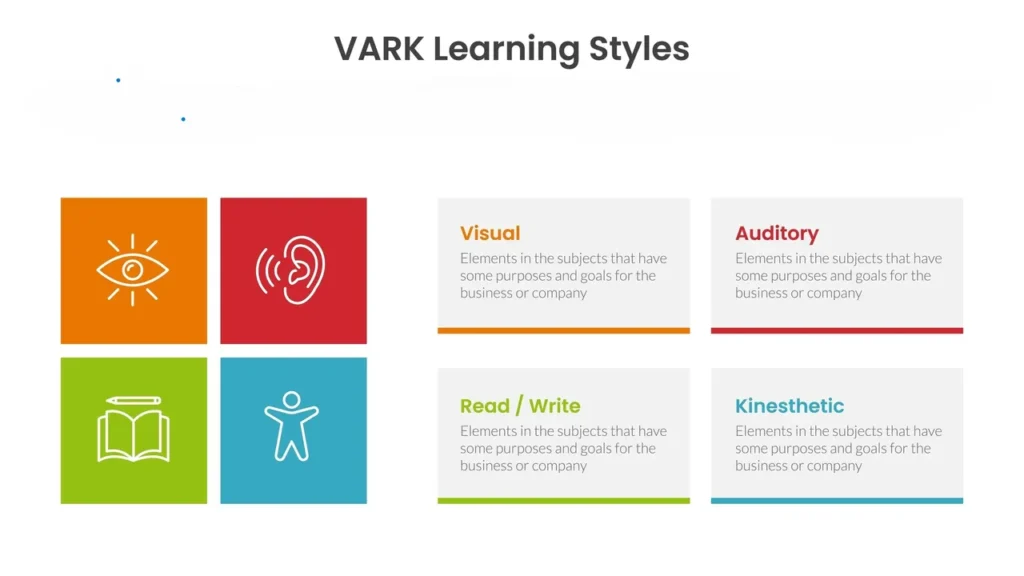
Understanding how you learn best can significantly enhance your academic and professional journey in the vast education landscape. The traditional model of learning styles, referred to as VARK, categorizes learners into four main types: visual, auditory, reading/writing, and kinesthetic. Beyond these, additional styles, such as social, solitary, and analytical learning, have also been recognized. Let’s delve into each type and explore their unique benefits.
1. Visual Learning Visual learners absorb information best through images, videos, and graphics. The benefits include: Enhanced Learning: Visual information is processed faster and retained longer in memory Critical Learning: Visual aids simplify complex concepts, making them easier to understand Organization: Visual learning encourages critical thinking and problem-solving skills 2. Auditory Auditory learners thrive on sound and speech. The advantages include: Improved Recall: They excel at remembering spoken information, aiding long-term memory. Language Skills: Auditory learning enhances language acquisition and verbal communication skills. Engagement: Auditory learners are skilled storytellers with a strong memory for verbal narratives. 3. Reading and Writing These learners prefer written text. The benefits are: Reading Comprehension: Writing about what they read improves reading skills and comprehension. Fluency: Writing enhances fluency in reading by reinforcing sound and spelling patterns. Analytical Skills: Reading and writing foster analytical thinking and a deeper understanding of texts.
4. Kinesthetic Kinesthetic learners acquire knowledge through physical interaction. The benefits include: Cognitive Development: Physical activity enhances mental function and problem-solving skills. Practical Applications: Hands-on learning improves retention by applying theoretical concepts in real-world scenarios. Adaptability: Kinesthetic learners develop adaptability and critical thinking through experiential learning. 5. Social Learning Social learners thrive in group settings. The advantages are: Collaboration: Encourages teamwork and collaboration, enhancing social skills. Feedback: Learners receive immediate feedback from peers, which aids in understanding and improvement. Motivation: Social interaction often boosts motivation and engagement in learning. 6. Solitary Learning Solitary learners prefer learning alone. The benefits include: Focus: Allows for undistracted focus on the material. Self-Paced: Learners can set their own pace, which can be more efficient for some. Reflection: Encourages introspection and self-assessment of learning progress. Conclusion Each learning style offers unique benefits that can enhance your educational journey. Understanding and leveraging your preferred learning style can optimize your learning experience, improve retention, and develop valuable skills. Whether you’re a visual, auditory, kinesthetic, or any other type of learner, embracing your learning style can unlock new opportunities for personal and professional growth.
nnWant more? Register free to access all Nu-Mix content